Skin Cancer Screening at Dermatology Associates of Ithaca
At Dermatology Associates of Ithaca, skin cancer screening is a core part of our commitment to lifelong skin health. Our board-certified dermatology providers perform comprehensive skin checks designed to detect skin cancer early, when it is most treatable. Whether you are coming in for your first skin exam or returning for routine monitoring, our team provides attentive, expert care in a comfortable and respectful setting.
Regular skin checks are especially important for patients with a history of sun exposure, prior skin cancer, changing moles, or a family history of skin cancer. We also encourage anyone with concerns about a new or changing spot to schedule an evaluation.
What to Expect During a Skin Check
A skin cancer screening at Dermatology Associates of Ithaca is straightforward, thorough, and focused on your comfort.
During your visit, your provider will:
- Review your personal and family history of skin cancer
- Ask about sun exposure, tanning history, and any areas of concern
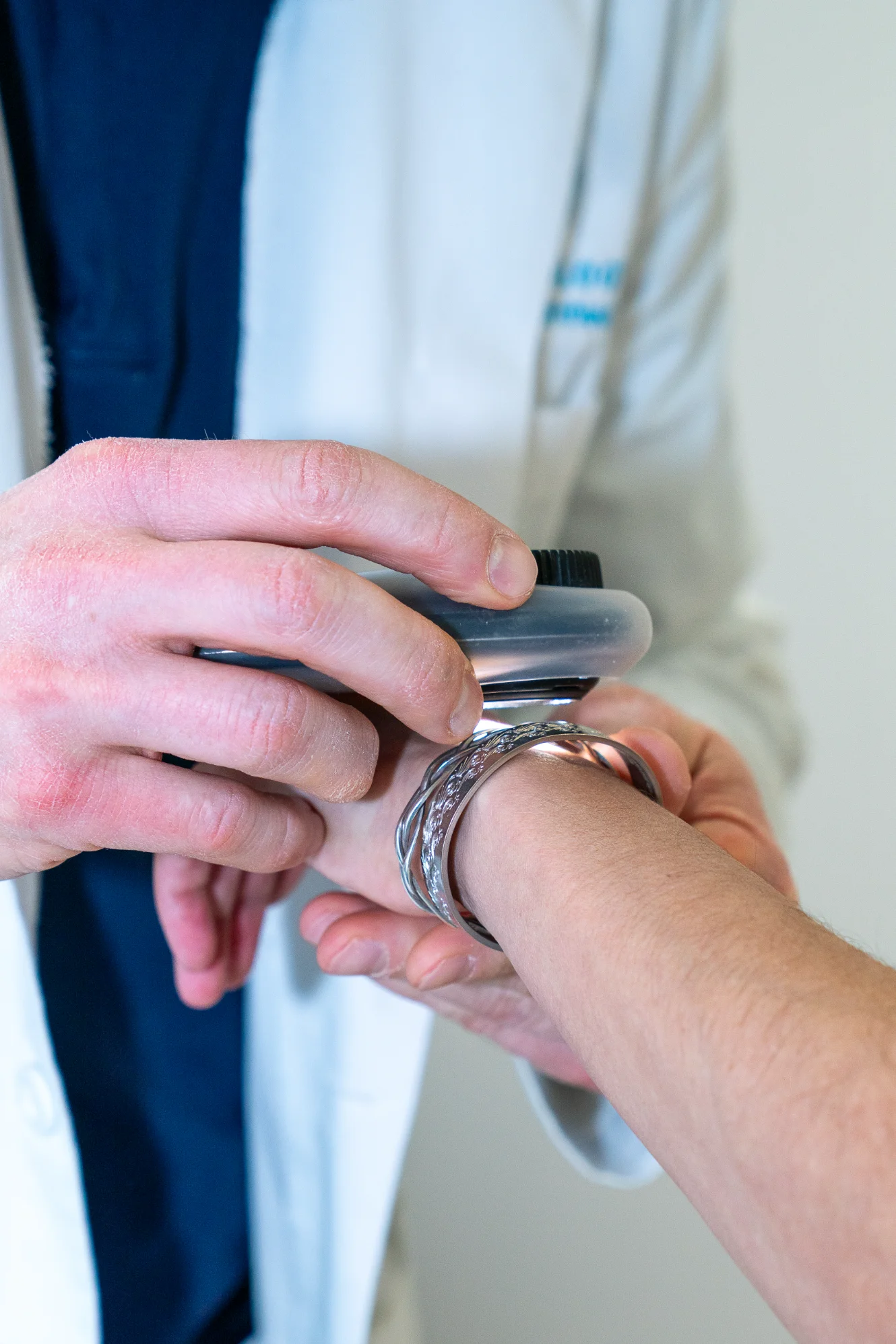
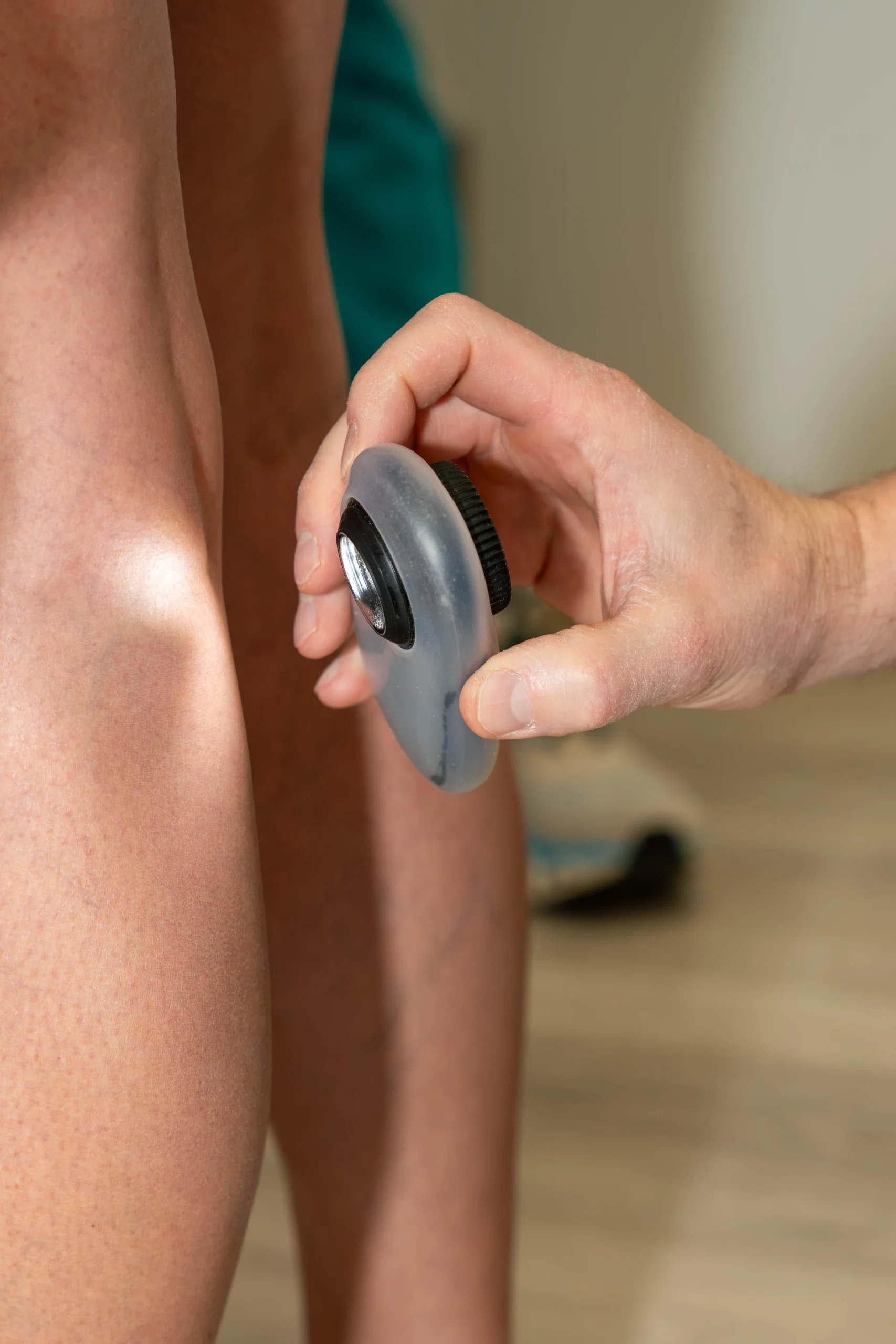
- Perform a head-to-toe visual examination of your skin, including the scalp, nails, and less visible areas
- Examine moles, freckles, and other lesions for signs of skin cancer or precancerous change
Feeling Nervous?
Check out Our Skin Cancer Handout: LINK HERE

If a suspicious area is identified, your provider may recommend a skin biopsy. This is a quick, in-office procedure performed with local anesthesia. If needed, we will explain every step and answer your questions before proceeding.
At the end of your visit, you will receive guidance on sun protection, self-skin exams, and how often future screenings are recommended based on your individual risk.
Schedule a Skin Cancer Screening With One of Our Providers
Why Is Skin Cancer Screening So Important?
Skin cancer is the most common cancer in the United States. Each year, more than 5.4 million cases of non-melanoma skin cancer are treated in over 3.3 million people. While skin cancer is often highly curable when detected early, delayed diagnosis can lead to disfigurement, serious complications, and even death.
Regular skin examinations are the most effective way to detect skin cancer early. A professional skin exam allows suspicious lesions to be identified and treated before they grow deeper or spread. Early detection truly saves lives.
Schedule a Skin Cancer Screening
Dermatology Associates of Ithaca
Types of Skin Cancer
There are three main types of skin cancer: basal cell carcinoma, squamous cell carcinoma, and melanoma. Each type can appear differently on the skin, which is why knowing the warning signs and monitoring for change is so important.
Skin cancers are often painless. Do not ignore a spot simply because it does not hurt. Any new, changing, or unusual lesion should be evaluated by a dermatologist as soon as possible.
Learn more about skin cancer diagnosis and treatment on our Skin Cancer Treatments page.
Schedule a Skin Cancer Screening
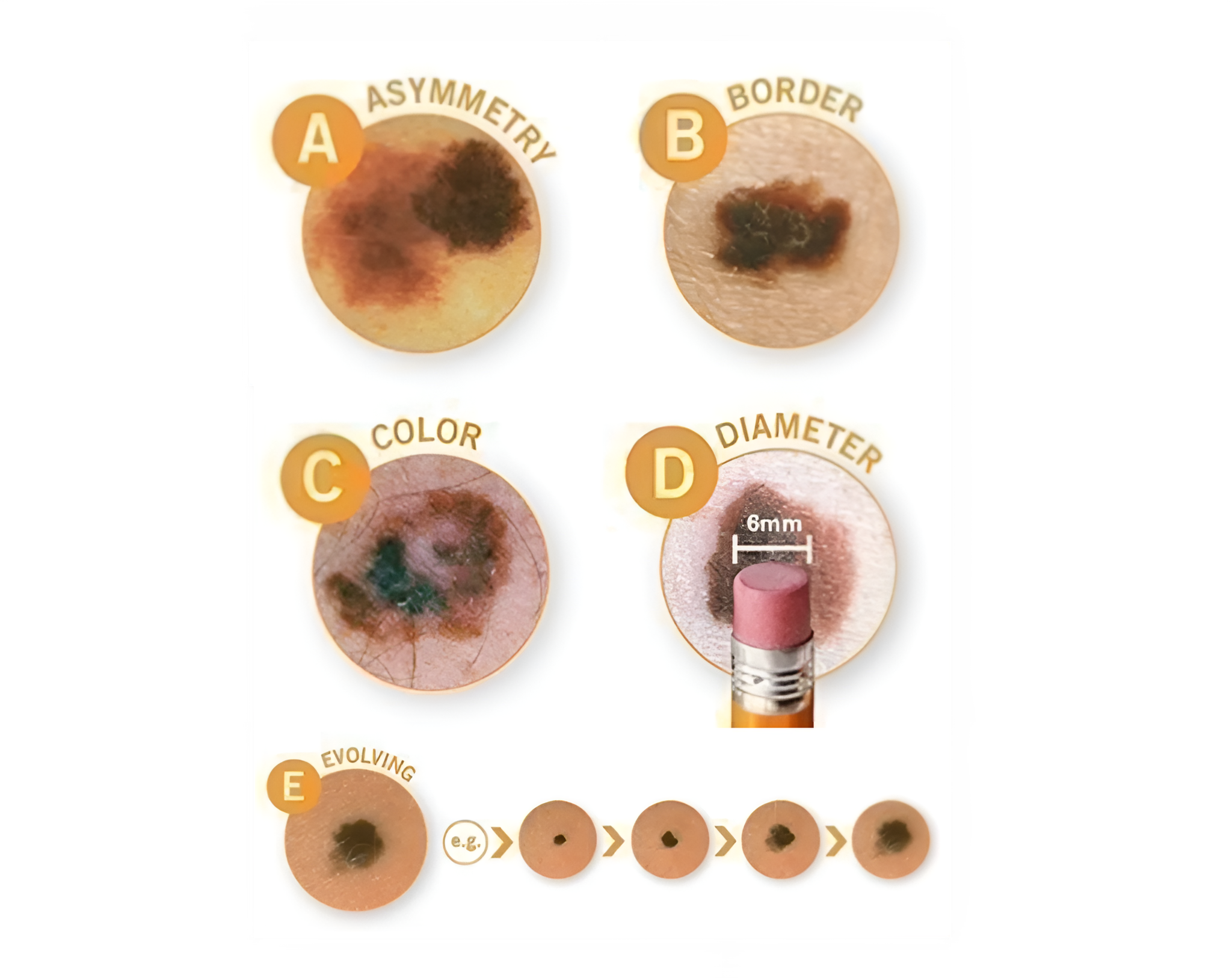
Warning Signs of Melanoma: The ABCDEs
Melanoma is the deadliest form of skin cancer, but it is highly treatable when caught early. Use the ABCDEs as a guide when examining your skin:
A | Asymmetry
One half of the mole or spot does not match the other.
B | Border
Edges are irregular, scalloped, or poorly defined.
C | Color
Color varies from one area to another and may include shades of tan, brown, black, white, red, or blue.
D | Diameter
Melanomas are often larger than 6 mm, about the size of a pencil eraser, but they can be smaller.
E | Evolving
A mole or lesion that is changing in size, shape, texture, or color, or looks different from others on your body.
If you notice one or more of these signs, contact our office promptly for an evaluation.
Schedule a Skin Cancer Screening
Other Types of Skin Cancer and Precancerous Lesions
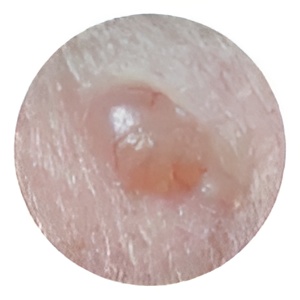
Basal Cell Carcinoma (BCC)
Often appears as a flesh-colored or pearly bump, or a pinkish patch of skin.
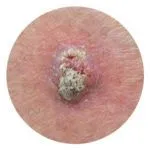
Squamous Cell Carcinoma (SCC)
May appear as a firm red bump, scaly patch, or a sore that heals and then returns.
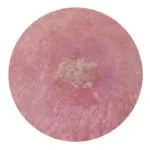
Actinic Keratoses (AKs)
Dry, scaly patches or spots caused by sun damage. These are considered precancerous and should be evaluated and treated.
Sun Protection and Prevention
Approximately 90 percent of non-melanoma skin cancers are associated with ultraviolet radiation from the sun. While sunscreen is an important tool, it should be combined with other protective measures such as protective clothing, seeking shade, and avoiding peak sun hours.
Schedule a Skin Cancer Screening

How Is Skin Cancer Diagnosed?
If a lesion appears abnormal during your exam, your provider may recommend a skin biopsy. The area is numbed, and a small sample of skin is removed and sent to a pathologist for evaluation under a microscope. Testing suspicious lesions early allows skin cancer to be treated before it grows deeper or spreads.
Early diagnosis offers the best chance for cure and the least invasive treatment.
Schedule a Skin Cancer Screening
Concerned about a spot on your skin or due for a routine check? Our experienced dermatology providers are here to help.
Schedule an Appointment



Contact Us
Have a question or ready to schedule? We’re here to help.